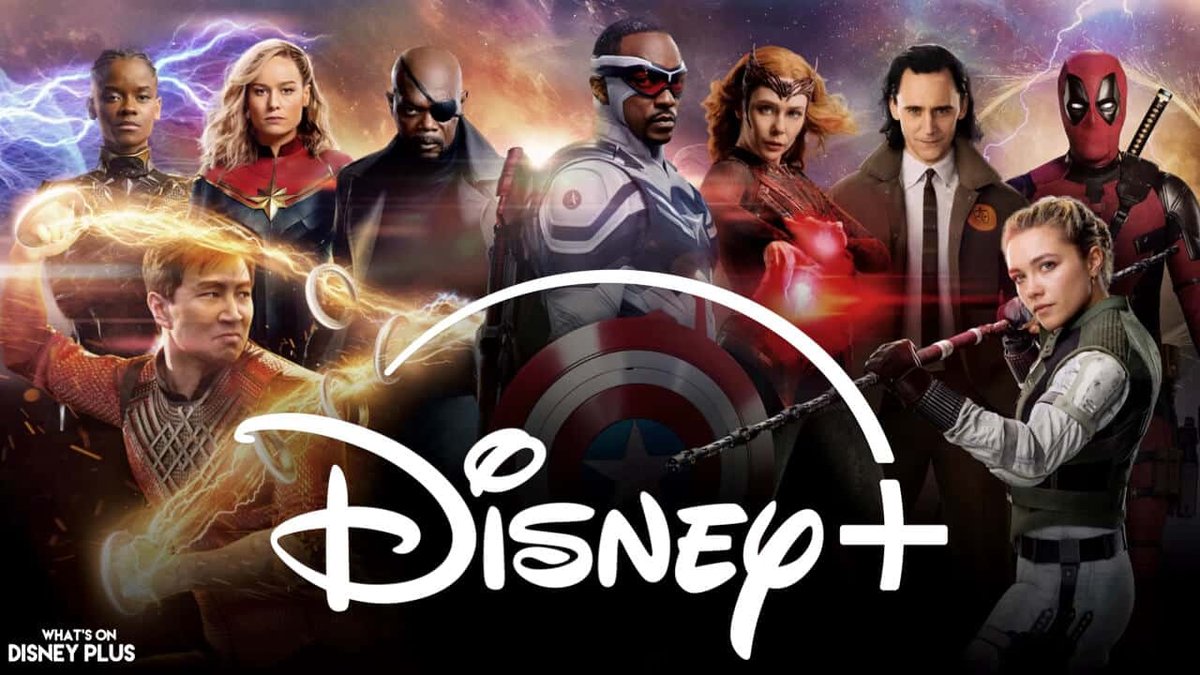
The Marvel Cinematic Universe (MCU) has become a storytelling juggernaut unlike any other, redefining what a cinematic universe can be. But as its narrative web expanded across films, it became clear that the traditional theatrical release model alone couldn't sustain its ambitious vision. Enter Disney+, a platform that fundamentally reshaped the MCU's approach, creating a dynamic 'Synergy Between Theatrical & Disney+ Marvel Releases' that drives its overarching narratives. This isn't just about more content; it's about a strategic dance between big-screen spectacles and deep-dive serialized storytelling, each indispensable to the other.
Initially, this expansion brought an unprecedented deluge of content. From 2021-2024, Marvel Studios dramatically ramped up its output, releasing an astounding 10 films, 12 TV seasons, and 2 TV specials – a 300% increase over the Infinity Saga era. The pace was relentless, with 9 titles planned for 2025 alone, ensuring only a handful of months without a new Marvel project premiere. This burst of content aimed to broaden the MCU's scope, introduce new characters, and delve deeper into existing lore than films ever could. However, this aggressive strategy also brought its own set of challenges, leading to a recent pivot towards a more measured approach that promises to refine this synergy.
At a Glance: The MCU's Evolving Two-Front War
- Disney+ Deepens, Theatrical Drives: Streaming series expand character arcs and lore, while films deliver major saga-defining events.
- A Strategic Pivot: After a period of high output, Marvel is slowing down to prioritize quality and impact, focusing on more intentional synergy.
- Laying Groundwork: Disney+ shows frequently introduce characters or plot points crucial for future theatrical films (e.g., Ironheart, Young Avengers members).
- Connecting the Dots: Films often resolve or advance storylines initiated in Disney+ series, bringing disparate threads together (e.g., Thunderbolts assembling characters from various origins).
- Navigating the Multiverse: Disney+ explores alternate realities and timelines, while theatrical releases often anchor the "sacred timeline" narrative.
- What's Ahead: A streamlined release schedule (3 films, 2 live-action shows, 2 animated shows, 1 special through 2027) aims for a more cohesive and impactful storytelling experience, setting up a "soft reboot" post-Secret Wars.
Disney+ as the MCU's Narrative Engine Room
Think of Disney+ as the highly efficient, multi-faceted engine room of the MCU. While the big-budget theatrical releases serve as the main propulsion, the streaming platform provides the nuanced power, the detailed mapping, and the subtle adjustments that keep the entire ship on course. It's where the creative team can tinker, explore, and build out the universe's foundational elements without the immediate pressure of a blockbuster box office.
Deep Dives and Character Incubators
One of Disney+'s primary roles is to serve as a character incubator, allowing Marvel to introduce new heroes and villains or give established supporting characters their much-deserved spotlight. These series aren't just standalone stories; they often serve as crucial origin tales or bridge narratives that directly feed into the larger cinematic tapestry.
Consider Riri Williams, the engineering prodigy who becomes Ironheart. She first appeared as a pivotal supporting character in Black Panther: Wakanda Forever, establishing her intellect and connection to Wakandan technology. Her upcoming solo series, Ironheart (June 24, 2025), is poised to further develop her character, explore her advanced suit, and introduce new antagonists like The Hood (Anthony Ramos). This phased introduction ensures that by the time Ironheart potentially joins a larger team in a feature film, audiences are already invested in her journey and understand her place in the MCU.
Similarly, Daredevil: Born Again (March 4, 2025) exemplifies how Disney+ can re-establish beloved characters within the sacred timeline. Marvel executive Brad Winderbaum confirmed that the Netflix Daredevil events are now canon, bringing Matt Murdock (Charlie Cox) and Kingpin (Vincent D’Onofrio) firmly into the fold. This series will not only continue their rivalry but also reintroduce Jon Bernthal's Punisher and later Krysten Ritter's Jessica Jones, setting the stage for their potential involvement in future theatrical events like Avengers: Doomsday or Spider-Man: Brand New Day. Disney+ effectively rehabilitates and integrates these characters, giving them the narrative space they need to become essential parts of the MCU's future.
Setting the Stage for Major Theatrical Events
Beyond character introductions, Disney+ series frequently lay critical groundwork for upcoming films, sometimes directly, sometimes subtly. They are the intricate puzzle pieces that connect disparate narratives and build towards larger convergences.
The entire concept of the "Young Avengers" is a prime example of this long-game synergy. The Marvel Studios president, Kevin Feige, has been strategically assembling this next generation of heroes across various projects:
- Ms. Marvel (Iman Vellani) from Ms. Marvel (and later The Marvels)
- Kate Bishop/Hawkeye (Hailee Steinfeld) from Hawkeye
- Billy Maximoff/Wiccan (Joe Locke) from WandaVision (and now Agatha All Along)
- America Chavez/Miss America (Xochitl Gomez) from Doctor Strange in the Multiverse of Madness
- Cassandra Lang/Stinger (Kathryn Newton, previously Katherine Langford) from Ant-Man and the Wasp: Quantumania
- RiRi Williams/Ironheart (Dominique Thorne) from Black Panther: Wakanda Forever and Ironheart
- Skaar (Wil Deusner) from She-Hulk: Attorney at Law
- Eli Bradley/Patriot (Elijah Richardson) from The Falcon and the Winter Soldier
- Tommy Maximoff/Speed (uncast, but referenced in WandaVision)
The tease in The Marvels (2023) with Ms. Marvel recruiting Hawkeye was a clear signal of this team's impending formation. Without the Disney+ series, the build-up for such a large ensemble would be unwieldy within feature films alone.
Theatrical Releases: Anchor Events and Grand Convergences
If Disney+ is the engine room, then theatrical releases are the grand voyages, the major destinations where all the narrative currents converge. These are the tentpole events that drive the main sagas, introduce game-changing elements, and assemble the diverse cast of characters carefully cultivated across both platforms.
Driving the Main Saga Forward
Films like Captain America: Brave New World (Feb. 14, 2025) and Thunderbolts* (May 2, 2025) are crucial for moving the overarching narrative forward. Brave New World sees Sam Wilson firmly established as Captain America, bringing back key figures like Isaiah Bradley and introducing Harrison Ford as Thunderbolt Ross, who will transform into the Red Hulk. It also promises to address significant global consequences, like the Celestial turning to stone from Eternals, revealing the existence of adamantium. This film isn't just about Sam Wilson; it's about the state of the world post-Blip and the emergence of new threats.
Thunderbolts*, on the other hand, gathers a team of anti-heroes — Bucky Barnes/Winter Soldier (Sebastian Stan), Yelena Belova (Florence Pugh), Red Guardian (David Harbour), U.S. Agent (Wyatt Russell), Ghost (Hannah John-Kamen), and Taskmaster (Olga Kurylenko) — many of whom were introduced or further developed in Disney+ series (The Falcon and the Winter Soldier, Black Widow, Hawkeye). This film acts as a direct consequence and assembly point for characters whose individual stories were explored on the small screen, proving the value of the Marvel Disney Plus release strategy. The mysterious asterisk in the title even hints at a deeper narrative implication to be revealed post-release, adding another layer of intrigue.
Major Introductions and World-Shaking Reveals
The biggest, most impactful character introductions and narrative shifts tend to happen on the big screen. The highly anticipated The Fantastic 4: First Steps (July 25, 2025) will introduce Marvel's First Family – Reed Richards (Pedro Pascal), Sue Storm (Vanessa Kirby), Johnny Storm (Joseph Quinn), and Ben Grimm (Ebon Moss-Bachrach) – to the MCU, albeit in an alternate universe setting. This film also brings in major cosmic players like Shalla-Bal, a Silver Surfer variant (Julia Garner), and the iconic antagonist Galactus (Ralph Ineson), instantly expanding the universe's cosmic scope.
Similarly, the culmination of the Multiverse Saga in Avengers: Doomsday (Dec. 18, 2026) and Avengers: Secret Wars (Dec. 17, 2027) will see the return of the Russo Brothers and the introduction of Robert Downey Jr. as the formidable Doctor Victor von Doom. These films are designed to be massive convergence points, bringing together established Avengers, the Fantastic Four, the Thunderbolts (as New Avengers), and original X-Men characters like Professor X (Patrick Stewart) and Magneto (Ian McKellen) against a singular, universe-threatening foe. Without the groundwork laid by years of Disney+ series exploring the multiverse and introducing these characters, the emotional weight and narrative complexity of such an event would be diminished.
Navigating the Interconnected Web: A Viewer's Guide
The sheer volume of Marvel content can feel overwhelming, but understanding the synergy helps in navigating this intricate web. It's not about watching everything to understand anything; it's about recognizing how different pieces contribute to the larger picture.
The "Must-Watch" vs. "Nice-to-Know" Dilemma
Marvel Studios' recent recalibration, reducing its output considerably through 2027, suggests a move towards a more intentional release schedule. This slower pace aims to return the MCU to a cadence closer to its 2010s heyday, potentially making each project feel more significant. For viewers, this could mean fewer "filler" projects and more direct connections.
As a general rule, theatrical films tend to be "must-watch" for the overarching plot, while Disney+ series often fall into the "nice-to-know, but crucial for deeper understanding" category. However, series like Daredevil: Born Again or Ironheart might become "must-watch" if their characters are integral to upcoming Avengers films. The synergy dictates that neglecting streaming shows can leave you with gaps in understanding character motivations or plot points in the films.
Understanding Alternate Realities vs. the Sacred Timeline
One of the key distinctions explored through the synergy is the difference between the "sacred timeline" and alternate realities. While films like Avengers: Doomsday and Secret Wars are anchored in the main MCU continuity, Disney+ provides a playground for multiversal exploration.
- Your Friendly Neighborhood Spider-Man (Jan. 29, 2025) is an animated series set in an alternate reality, harking back to Peter Parker's comic origins with Norman Osborn as his mentor.
- Marvel Zombies (Sept. 24, 2025) is a TV-MA animated series exploring a zombie apocalypse in a separate timeline.
- The Fantastic Four: First Steps is also confirmed to be set in an alternate universe.
These projects don't directly impact the main continuity but enrich the broader multiversal narrative, showcasing different possibilities and interpretations of beloved characters. It's important to distinguish these from projects explicitly confirmed to be part of the sacred timeline, like Daredevil: Born Again, where the events of the Netflix series are now canon.
The upcoming Spider-Man: Beyond The Spider-Verse (June 18, 2027), while a major theatrical release, is part of Sony's animated Spider-Verse trilogy and is explicitly outside the MCU's continuity, offering its own distinct multiversal narrative.
Unpacking Key Projects & Their Synergistic Roles
Let's look at how specific upcoming projects demonstrate this intricate dance between theatrical and streaming.
- "Captain America: Brave New World" (Feb. 14, 2025): This film solidifies Sam Wilson's role and introduces Red Hulk and The Leader, both potentially huge players. Its connection to the Celestial from Eternals shows how films can retroactively explain or build upon previous, perhaps less-understood, theatrical elements.
- "Daredevil: Born Again" Season 1 (March 4, 2025): Not just a return, but a re-canonization. By confirming the Netflix series' events are sacred, it bridges a crucial gap for fans and sets up future character integration across films and shows, including the Punisher and Jessica Jones.
- "Thunderbolts" (May 2, 2025):* This is the quintessential example of synergy. It brings together characters whose individual journeys unfolded across Black Widow (Yelena, Red Guardian, Taskmaster), The Falcon and the Winter Soldier (Bucky, U.S. Agent), and Ant-Man and the Wasp (Ghost). The film acts as a direct consequence of these disparate plotlines, assembling them for a new mission.
- "Ironheart" (June 24, 2025): Follows up on Riri Williams' strong introduction in Black Panther: Wakanda Forever, giving her the space to evolve as a hero before she inevitably joins larger MCU events.
- "The Fantastic 4: First Steps" (July 25, 2025): While set in an alternate universe, introducing the Fantastic Four and cosmic entities like Galactus and Silver Surfer on the big screen establishes their power and importance before they potentially interact with the main MCU post-Secret Wars.
- "Wonder Man" (Jan. 27, 2026): A Disney+ series that promises a meta-narrative about a struggling actor with superpowers, bringing back Ben Kingsley's Trevor Slattery. This type of character-driven, slightly more experimental storytelling thrives on Disney+.
- "Spider-Man: Brand New Day" (July 31, 2026): Tom Holland's fourth solo film, directed by Destin Daniel Cretton, promises a street-level story directly incorporating the ending of No Way Home (Peter Parker erased from memory) and connecting to the events of Avengers: Doomsday. The involvement of Punisher (Jon Bernthal) and Scorpion (Michael Mando) further cements the cinematic-streaming cross-pollination.
- "Avengers: Doomsday" (Dec. 18, 2026) & "Avengers: Secret Wars" (Dec. 17, 2027): These are the ultimate convergence points. Redefining the antagonist from Kang to Doctor Doom (Robert Downey Jr.), these films will unite virtually every corner of the MCU – Avengers, Fantastic Four, Thunderbolts, and even the original X-Men. The narratives built across years of theatrical releases and Disney+ series will culminate here, leading into a confirmed MCU reboot, which Kevin Feige stated will happen with the X-Men reboot.
- "Armor Wars" (Undated): Originally a Disney+ series, now a feature film, it directly carries over events from Secret Invasion (2023), where James Rhodes was revealed to be a Skrull. This project highlights how the flexible strategy allows content to shift platforms to best serve the narrative, addressing Iron Man's legacy on a grander scale.
- "Blade" (Undated): While plagued by delays, Mahershala Ali's Blade is confirmed for Marvel Zombies (2025), showing how even delayed theatrical projects can maintain relevance through Disney+ appearances, potentially pivoting to a "Midnight Sons" team-up film.
Challenges and Course Corrections: Refining the Synergy
The initial explosion of content on Disney+ undoubtedly led to some growing pains. Viewer fatigue, perceived drops in quality, and an overwhelming amount of content made it difficult for casual viewers to keep up. The disappointing box office results for some recent theatrical releases, even those with strong Disney+ ties, prompted Marvel Studios to re-evaluate its strategy.
The decision to reduce output significantly through 2027—removing four untitled Marvel films and streamlining the schedule—is a direct response to these challenges. This isn't a retreat from the synergy, but a refinement of it. The goal is to return to a more deliberate pace, ensuring that each theatrical film and Disney+ series has ample time for development and a clear, impactful role in the larger narrative. This means less "quantity" and a greater focus on "quality" and "necessity" within the interconnected storytelling framework. The balance between catering to hardcore fans and maintaining accessibility for a broader audience remains a critical tightrope walk.
The Enduring Power of a Unified Narrative
Despite the hurdles and necessary course corrections, the synergy between theatrical and Disney+ Marvel releases remains the MCU's greatest strength. It allows for an unprecedented depth of storytelling, giving characters room to breathe, plots to simmer, and a universe to expand organically. When executed well, this two-pronged approach provides an immersive experience that no other franchise can replicate. It’s a bold experiment in long-form, interconnected storytelling, and the future, with its reduced output and clearer direction, seems poised to deliver more impactful and cohesive narratives.
Your Next Dive into the MCU
As Marvel Studios moves forward with its refined strategy, the key for viewers is to approach the MCU with intentionality. Understand that some Disney+ series are deep-dive character studies, others are crucial puzzle pieces for upcoming films, and the animated offerings provide rich multiversal context without necessarily being "canon" to the main timeline. Theatrical films will continue to serve as the major milestones, the big events where all these threads converge. By appreciating the unique role each platform plays, you'll gain a richer, more satisfying understanding of the ever-expanding Marvel Cinematic Universe. Stay tuned, because the story is only getting more intricate, and the connections more vital.